There's a promise sold to a lot of birthing people, sometimes subtly, sometimes directly: with the right technique, the right playlist, the right breathing pattern, the right epidural timing… the pain will go away.
I want to offer something different, because I think the promise of "pain relief" sets people up to feel like they failed when it doesn't come true.
In birth, we are not relieving pain. We are managing it, mitigating it, making it more tolerable. But it doesn't disappear — and it isn't supposed to. Pain in labor isn't a malfunction. It's productive. It's your body doing something enormous, and the sensation of that is real, and it's allowed to stay real. The goal was never to make it vanish. The goal is to change your relationship to it so it doesn't have to be terrifying.
What Pain Actually Is
Pain is not simply a message that travels in a straight line from your uterus to your brain and rings an alarm bell. That's the old model, and it's incomplete.
What actually happens: nerve endings detect pressure, stretch, and chemical changes in the tissue — this is called nociception, and it's just raw signal, not yet "pain." That signal travels up the spinal cord, and at that level, there's essentially a gate. Other input — touch, movement, warmth, the sound of a familiar voice, a feeling of safety — can partially close that gate, letting less signal through. Fear, tension, and a sense of danger can open it wider, letting more through.
Then the signal reaches the brain, and this is the part people are rarely told: the brain doesn't just receive pain, it constructs it. The same nociceptive signal can be interpreted as unbearable or as manageable depending on context — what you believe is happening, whether you feel safe, whether you feel supported, what you expect. This is why the same contraction can feel unbearable when someone is afraid, alone, and tense, and much more workable when they're supported, informed, and able to soften into it. The tissue-level signal hasn't changed. The brain's interpretation of it has.
The Fear-Tension-Pain Cycle
This is the piece I want every birthing person to understand, because it changes everything about how you prepare.
Fear triggers your sympathetic nervous system — adrenaline, cortisol. That response causes your muscles, including the muscles of your uterus and pelvic floor, to tighten. A tightened uterus working against a tightened pelvic floor has to work harder to do the exact same job, which produces more sensation, which your brain — already primed for danger — interprets as more pain. That fresh spike of pain confirms the fear. Fear tightens again. The cycle feeds itself.
This is sometimes called the fear-tension-pain cycle, and it explains why so much of birth preparation isn't really about pain at all — it's about interrupting this loop before it starts. Not by pretending birth won't hurt. By making sure fear and tension aren't adding sensation on top of sensation that was already going to be there anyway.
Managing Pain Without Fearing It
So what do we actually do, if we're not chasing relief?
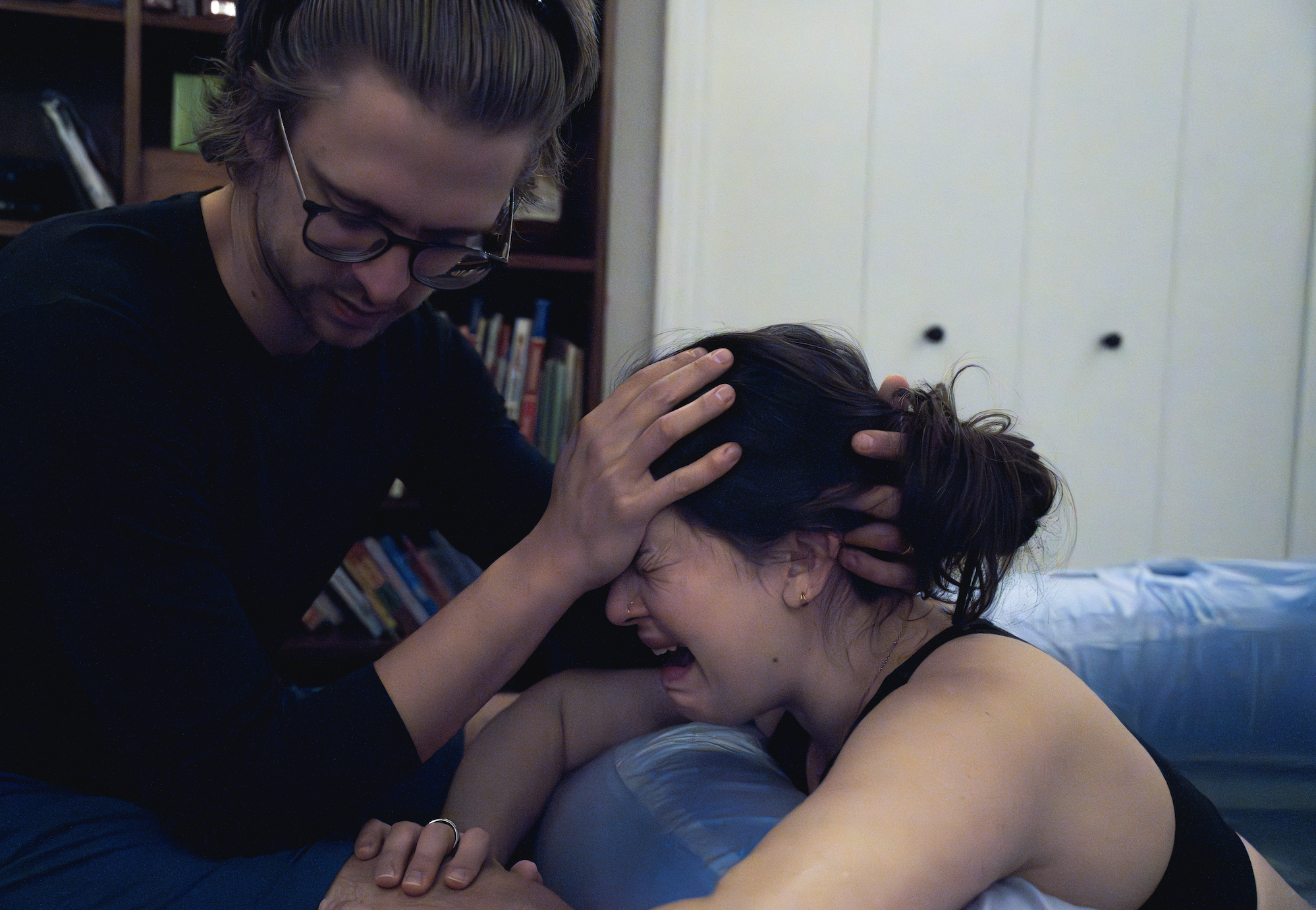
We mitigate. We support the nervous system so it isn't flooding the body with stress hormones. We use movement, position changes, warmth, hydrotherapy, low steady sound, hands-on support, and a calm, informed presence to help close that gate at the spinal cord instead of throwing it wide open. We help release physical tension — through bodywork, through breath, through simply feeling less alone in the room — so the uterus can do its job without fighting a clenched pelvic floor on top of it. All of this changes the experience of the pain. None of it erases the pain itself, and it was never supposed to.
This is also, at its core, a non-fear-based approach. Not fear-free — nobody promises you won't feel afraid in labor, and that's a normal, human thing to feel. But we don't let fear run the show unchallenged, because we know exactly what it does biologically when it does: it tightens the body and turns up the volume on every sensation moving through it.
Pain Doesn't Have to Be the Enemy
I think this reframe matters because so many people walk away from birth feeling like their body failed them, or like they failed at "handling it," when really — the pain was never optional, and no one told them that going in. Pain, here, isn't a sign something's wrong. It's often a sign something is working exactly as it should: your body opening, your baby moving down, an enormous physiological event unfolding in real time.
You don't need to make peace with the idea that it won't hurt. You need tools to keep fear and tension from making it hurt more than it already was going to — and permission to know that managing it well, staying present through it, and not needing it to disappear, is not a lesser outcome. It's the realistic one.
Love,
Dr. Emily