Pranayama

Breath and death are two of the few things all humans have in common.

And we are, as David Swenson so aptly put it, only one breath away from death at any moment. There is a profoundly thin veil between life and death... and that is the breath.

Years ago, I had the privilege of attending the Yoga Journal Conference in SF. I was able to see my yoga teacher, Tias and reawaken my love for the moon, the gentle, the yin.

Time, space, and intention are the greatest healers.

The smaller the movement, the greater the impact on the brain.

This is why breath is so important: Each breath we take involves movement on every level of the body: musculoskeletal, nervous, and cellular.

In yoga, we practice something called Pranayama.

Prana refers to a life giving force, while the rest of this concept is a little more complex. In Sanskrit many words are fused, so the second half of this word can be interpreted as yama, or ayama. Yama refers to an intention to control, while ayama means to draw out or extend.

Two possible definitions: Breath control or extension of life force.

In Ashtanga yoga, pranayama is not practiced until the student has mastered the asana, or postures. Pranayama is considered extremely powerful, and should only be practiced with an experienced teacher.

I encourage you to do some research, ask lots of questions and always remember to breathe.
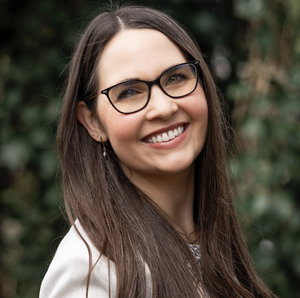
Dr. Emily Spaeth, PT, DPT, IBCLC, CNT, TIP

Emily Spaeth is a Doctor of Physical Therapy and International Board Certified Lactation Consultant specializing in the intersection of infant development, breastfeeding, and perinatal health. With a background in the NICU and foundation as a perinatal yoga teacher, Dr. Emily brings a unique, whole-body perspective to understanding how babies grow, move, feed, and develop — beginning in pregnancy and continuing through infancy.

She is the founder and CEO of Be Well Baby, a multidisciplinary practice in Portland, Oregon, and the creator of the Functional Lactation Intensive, an advanced educational experience for clinicians. Through her clinical work and professional education, Dr. Emily bridges the worlds of physical therapy, lactation, and developmental science to help parents and professionals better understand the connections between prenatal development, movement, positioning, reflexes, nervous system regulation, and feeding.

Her mission is to elevate the standard of care in perinatal health care and shift the way we understand infant feeding and development. She aims to looking beyond the latch or individual milestones to see the whole baby, the experiences that shape their development, and the interconnected systems that support their growth from pregnancy onward.

Learn more about Dr. Emily by clicking the link below!

https://www.bewellbaby.org/dr-emily
Previous
Previous

This Morning Routine Will Improve Your Mood

Next
Next

The Beginners Guide to Meditation